SF Agile
Transforming the world of work
Aug 3, 2022
Maurice (Mo) Hagar and Rod Sherwin
Review by Rod Sherwin
Mo Hagar is part of a growing world-wide community of agile practitioners who also have knowledge of the solution focused approach to change. I like the way Mo draws out the strong parallels between agile and solution focused approaches and shows how existing agile practices can be enhanced by applying SF thinking. For those working in agile teams, we often quickly take to SF because of this strong alignment in principles. I look forward to being part of this community as it grows and develops around the world.
About the Reviewer
Rod Sherwin is a solutioneer, coach, team catalyst, facilitator and speaker who uses solution focused approaches as a direct route to create Business Agility and respectful lasting change for individuals, teams and organisations. Having seen how agile approaches have helped improve the way we work at team level, Rod is now facilitating business agility to allow companies to respond and adapt to the rapid pace of change and competitor innovation.
Article: Solution-Focused Agile: Transforming the World of Work
I am deeply indebted to the Agile community for its formational role in my continuing development. Yet my most significant influences have come from outside the Agile community.
As Dave Snowden illustrated in his Cynefin Framework (Snowden & Boone, 2007) i, managing complex work is devoid of direct correlation between cause and effect. Many companies, including Agile organizations, are wasting much time and money on problem analysis and “what’s not working?”.
Psychotherapist Steve de Shazer (de Shazer, cited in Berg & Szabo, 2005) iiput it this way: “Problem talk creates problems; solution talk creates solutions.” Using this insight amongst many others, de Shazer, along with Insoo Kim Berg and their associates at the Milwaukee Brief Family Therapy Center, created the discipline of Solution-Focused Brief Therapy. I encountered it in passing, referenced by Agile thought leader Alistair Cockburn, and more recently by Mike Burrows. Solution-Focused Brief Therapy has profoundly influenced my thinking and is the distinguishing feature of Solution-Focused Agile.
Solution Focus and Agile
Synergies between Solution-Focus and Agile ways of working are striking. The Association for Solution Focus in Organisations (sfio.org) maintains a list of “clues” iii that characterise Solution-Focused ways of working. The following clues define the basic position of the practitioner towards the team or, adapted to Agile, the basic position the Scrum Master, coach, or leader would take towards the team, as well as the basic position of the team towards their customer.
1. Clue: “Change is happening all the time—our role is to find useful change and amplify it.”
In the Manifesto for Agile Software Development and Twelve Principles of Agile Software (Manifesto for Agile, 2001) we find: “Responding to change over following a plan…Agile processes harness change…” Continuous and rapid change is a characteristic of complex systems; resistance is futile.
Discovering, channeling, and building on positive change is at the heart of both Solution Focus and Agile ways of working.
2. Clue: “Resource orientation rather than deficit orientation.”
Similarly, an asset rather than a deficit-based orientation is best practice in the domain of community development, and a strength rather than deficit-based orientation is best practice in the field of education.
In the Agile world this important insight is sometimes assumed but rarely practiced. Affirming our resources, assets, and strengths sounds insignificant but makes a big difference in how we think, talk, and work. This can be a powerful tool for building a healthy, positive, productive culture and high-performing teams.
3. Clue: “A stance of having as few assumptions about the client as possible and deeming clients to be the expert on their own lives and desires”
The two most important questions when beginning an Agile transformation are:
- Should we do Agile? and
- Could we do Agile?
The answer to the first question depends on the complexity of the work; if it is complex work, we should use Agile. The answer to the second question depends on our level of collaboration with the team as the client of the practitioner and the customer as the client of the team.
This is deeply embedded in the Manifesto and 12 Principles (Manifesto for Agile, 2001) iv: “Customer collaboration over contract negotiation…Our highest priority is to satisfy the customer…Business people and developers must work together daily…”
The client is the subject matter expert. And our success depends upon satisfying their requirements and needs.
Another application of this principle is in self-management because the team as client is the expert in their own work. This, too, is deeply imbedded in the 12 Principles (Manifesto for Agile, 2001): “Build projects around motivated individuals. Give them the environment and support they need and trust them to get the job done…The best architectures, requirements, and designs emerge from self-organizing teams…At regular intervals, the team reflects on how to become more effective, then tunes and adjusts its behavior accordingly.”
This is a key ingredient in the Agile recipe.
4. Clue: “A respectful, non-blaming and co-operative stance”
Norman Kerth’s Prime Directive (Kerth, 2001) v is the Agile equivalent: “Regardless of what we discover, we understand and truly believe that everyone did the best job they could, given what they knew at the time, their skills and abilities, the resources available, and the situation at hand.” And respect is a core value of both Scrum and Kanban; respect is a core value of every high-performing team.
5. Clue: “An interactional view (inbetween not “inside” a person)”
“Individuals and interactions” is the first plank in the Agile Manifesto (Manifesto for Agile, 2001). Actions are important, individuals are more important, interactions are most important.
As Paul Jackson and Mark McKergow (Jackson & McKergow, 2006) vi put it, “View organizational problems in interactional terms — the action is in the interaction…Promoting helpful interactions can produce widescale changes quickly and sustainably.”
6. Clue: “Working towards their client’s goals from within their client’s frames of reference, while keeping their own (external) perspective”
The first of the 12 Principles (Manifesto for Agile, 2001) states: “Our highest priority is to satisfy the customer through early and continuous delivery of [value].” Value is defined by the customer, or client, and working with their goals and frames of reference is the first step towards delivery of customer value and satisfaction; this is what it means to be “solution focused.” Working towards customer goals amid continuous change is what it means to be “agile.”
7. Clue: “Treating each case as different and developing the process according to what the client says rather than imposing a fit into a theoretical or conceptual framework—the process emerges differently each time based on what the clients say/do/want”
The Agnostic Agile (Agnostic Agile, 2018) vii values statement continues: “I will remember that attaining agility does not guarantee a better outcome for my customer, and that in some cases, other more traditional approaches might be better for the current climate and context…I will not be dogmatic when it comes to lean or agile frameworks or methods, because dogmatism is non-agile, does not benefit my customer…” SF Agile is agnostic and each engagement fit-for-purpose. As statistician George Box viii (Box, 2005) put it: “All models are wrong, but some are useful.”
From “Clues” to “Tools”
The SFiO “clues” also includes a listing of tools that characterize SF ways of working. Some of these are recognizable by Agile practitioners, others are not. All of them are useful additions to the Agile toolbox for everything from building Backlogs to facilitating Retrospectives.
SF tools are an upgrade to similar Agile tools because they quickly move organizations forward rather than leaving them stuck in problems., while overtly serving their purpose, they are also achieving something far more important: building a healthy, positive culture and high-performing teams. For example, “promoting descriptions [goals, requirements, etc.] in specific, small, interactional…terms” is a familiar concept to Agile practitioners. The subtle, culture-building twist is “promoting descriptions in…positive terms (presence of solutions rather than absence of problems…).”
“Helping the clients build a description of their own ‘preferred future’…” is a familiar concept to Agile practitioners. The subtle, culture-building twist is “using the miracle question or other ‘future perfect’ oriented questions.” “Establishing elements of the ‘preferred future’ which are already happening” is familiar to Agile practitioners; the culture-building twist is “using scaling questions, exception questions, coping questions, counters questions and other methods.” “Helping the client identify and take small… steps in the direction of the desired change” is familiar to Agile practitioners; the culture-building twist is “…constructive steps…” Words matter, and SF language helps build a SF culture. Apart from culture building, Agile principles and practices are not sustainable or scalable. Accomplished Agilists know this but lack substantive guidance and tools to do anything about it. Solution-Focused Agile provides a framework for both getting the work done and culture building at the same time.
Case Story 1
Here is a brief example, from a recent coaching engagement, I was contracted to coach an existing Scrum team that had “the skill but not the will” to be productive. I typically begin with a team Retrospective because it is a frame of reference they are familiar with. And troubled teams always prefer to talk about “what’s not working” more than “what is working.”
Flip It
“What’s not working” is a good starting point because, again, it is a familiar frame of reference and, more importantly, because their first lesson is what I call “Flip It!” I produce a magnet, demonstrate what they already know about magnetism, and discuss how that applies to their team. They know that a magnet has both a positive and a negative side: the positive side attracts; the negative side repels. So, we add a new ground rule to their social contract: “Flip It!”
The next step, then, is to flip “what’s not working.” “We have way too many defects” is rewritten to say, “We want to have fewer defects.” The shift is subtle but important: not only does it flip the polarity of our culture, it also reorients us from grumbling about the past to dreaming about the future.
Preferred Future
“Speaking of dreams,” I say, “imagine that tonight, while you are fast asleep, dreaming of fewer defects, less multi-tasking, and everything else we just imagined, somebody waves a magic wand—voila, a miracle—and all your dreams come true. What would that look like? When you wake up the next morning, what might be your first clue that something was different? Who else would notice? What would they see? And what else?”
Using Design Thinking tools, we “diverge to ideate” and “converge to cluster,” daydreaming together, and casting a vision of their “preferred future perfect.” “Without a vision, the people perish” declares the biblical proverb. And now our “future perfect” includes “zero defects,” as well as intangibles such as “enthusiasm” and “empathy.” The problem with intangibles, values statements, social contracts, and the like, is that they are not actionable; the dream was a hallucination, an illusion, a mirage of what might have been. The next small step towards change is prioritization. I coach the team in moving their dream clusters to impact by a feasibility matrix. They use dot voting to reach consensus on where they want to focus. Then, for each priority, I inquire “what else?” and we continue ideating. “What else?” for instance, “in your ‘future perfect’ world, what does ‘enthusiasm’ look like?” At this point, the team is encouraged to update their ground rules, team values, or social contract to reflect their new focus.
Scale
The next step is gap analysis using the SF scaling tool. This is a powerful instrument in the SF Agile toolbox—and instantly recognizable in organizations using Net Promoter Score (NPS). “On a scale of zero to 10, where 10 is the ‘future perfect’ enthusiasm we’ve been dreaming of, where is the team today?”
Small Steps
Now the team is ready to begin working towards solutions; once again, they ideate and converge on next small steps. “If we had moved up one step on the scale, how would we know? What would be the first signs that this was happening? What would others notice? What else?” Improvement actions are identified and added to the team’s backlog, and at least one of these must be always in progress.
Check What’s Better
During Retrospectives the team revisits their desired “future perfect” states, scales, and improvement actions. They may revise them as their needs and desires change; they may agree that, “A six on enthusiasm is good enough for now so let’s work towards zero defects next.” Most importantly the team is continuously learning, growing, maturing.
In Conclusion
I am well along the road in this journey of discovery. And the years have taught me much by way of experience in over 60 organizations, big bang experimentation, more than my fair share of success, and plenty of failure too. The time has come to give something back to both the Agile and Solution-Focused communities. I know of only a handful of Solution-Focused Agile practitioners around the world, and most of those are concentrated in Europe. My dream is to advance widespread adoption of Solution-Focused Agile because I have witnessed first-hand its miracle-working power to change the world of work for good. On a scale of zero to 10, today I am at a one.
About the Author
My journey began as a software developer where I was an early adopter and advocate of Agile principles and practices. Years later I was hired as Chief Information Officer to lead an enterprise-wide Agile transformation. Since then I have served more than 60 organizations around the world as an Agile trainer, coach, and consultant. Currently, I am a workforce transformation consultant and enterprise Agile coach for IBM.
Contact: Website
References
i. Snowden, D.J. and Boone, M., E. (2007) “A Leader’s Framework for Decision Making”, Harvard Business Review, November 2007, pp. 68-76. Author’s website: https://cognitive-edge.com/
ii. Berg, Insoo Kim and Szabo, Peter. (2005). Brief Coaching for Lasting Solutions, New York, NY: W. W. Norton & Company. p. 1.
iii. http://www.sfio.org/home/be-involved-with-asfio/what-sf-is/what-makes-work-solution-focussed-clues/
iv. Manifesto for Agile Software Development, viewed 7 December 2018, https://agilemanifesto.org
v. Kerth, Norman. (2001). Project Retrospectives: A Handbook for Team Reviews. New York, NY: Dorset House Publishing, p. 7.
vi. Jackson, Paul Z. and McKergow, Mark. (2006). The Solutions Focus: Making Coaching and Change SIMPLE (2nd ed.). Boston, MA: Nicholas Brealey Publishing, p. 54.
vii. Agnostic Agile, viewed 8 December 2018, https://agilemanifesto.org
viii. Box, G. E. P., Hunter, J. S., and Hunter, W. G. (2005). Statistics for Experimenters: Design, Innovation, and Discovery (2nd ed.), Hoboken, NJ: John Wiley & Sons. p. 440.
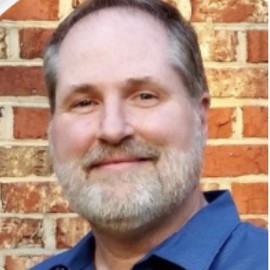
Maurice (Mo) Hagar
InterAction Contributor
SFiO Contributor
My journey began as a software developer where I was an early adopter and advocate of Agile principles and practices. Years later I was hired as Chief Information Officer to lead an enterprise-wide Agile transformation. Since then I have served more than 60 organizations around the world as an Agile trainer, coach, and consultant. Currently I am currently a workforce transformation consultant and enterprise Agile coach for IBM.
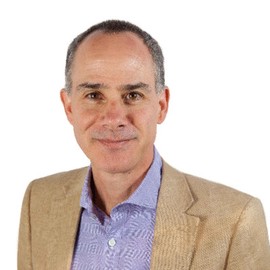
Rod Sherwin
InterAction Contributor, SFiO Contributor
Rod Sherwin is a solutioneer, executive coach, team catalyst, facilitator and professional speaker who uses solution-focused approaches as a direct route to create Business Agility and respectful lasting change for individuals, teams and organisations.